
Search the Site with

|
Search the Site with
|
 General Characteristics Crew List Memorabilia Accidents aboard the Ship About the Name "Thach" Sinkex Image Gallery to end of page
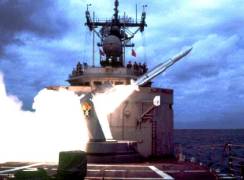 | 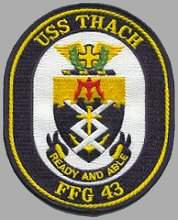 | 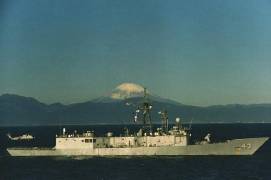 |
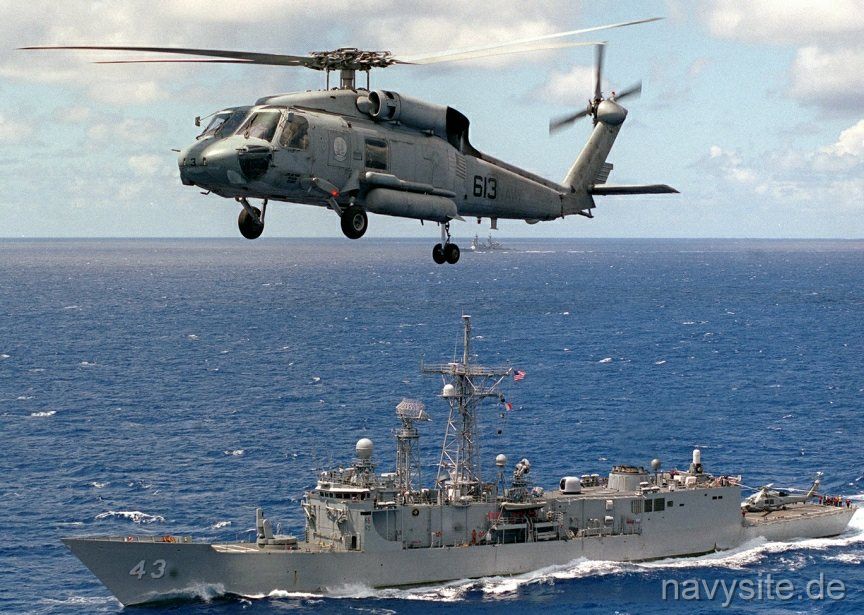
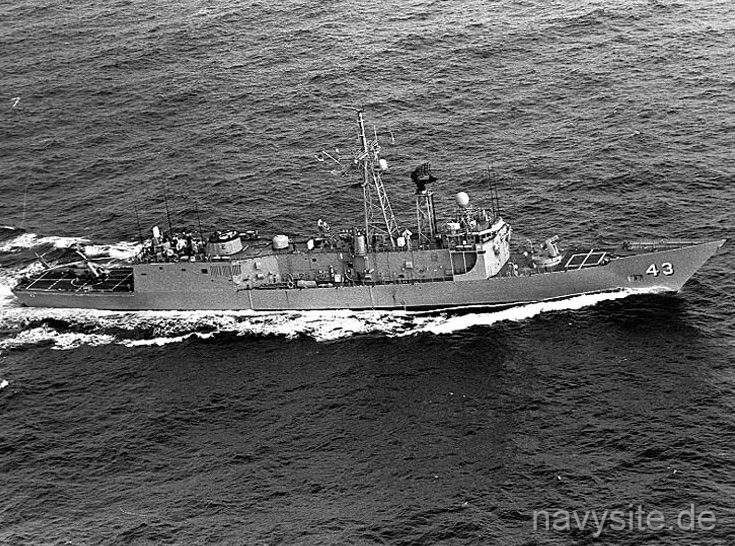
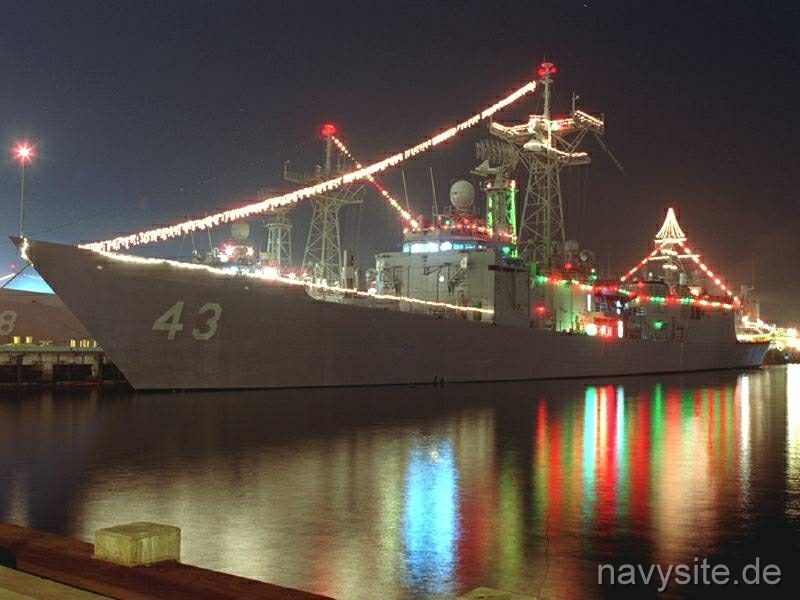
USS THACH was the 34th OLIVER HAZARD PERRY class guided missile frigate and the first ship in the Navy to bear the name. Last homeported in San Diego, Calif., the THACH held a decommissioning on November 1, 2013, before she was officially decommissioned and stricken from the Navy list on November 15, 2013. On July 14, 2016, the THACH was sunk as a target during RIMPAC 2016 about 55 nautical miles north of Kauai, Hi.
| General Characteristics: | Awarded: April 27, 1979 |
| Keel laid: March 6, 1982 | |
| Launched: December 18, 1982 | |
| Commissioned: March 17, 1984 | |
| Decommissioned: November 15, 2013 | |
| Builder: Todd Pacific Shipyards Co., Los Angeles Division, San Pedro, Ca. | |
| Propulsion system: two General Electric LM 2500 gas turbines, two 350 Horsepower Electric Drive Auxiliary Propulsion Units | |
| Propellers: one | |
| Blades on each Propeller: five | |
| Length: 453 feet (135.9 meters) | |
| Beam: 45 feet (13.5 meters) | |
| Draught: 24,6 feet (7.5 meters) | |
| Displacement: 4,100 tons | |
| Speed: 28+ knots | |
| Aircraft: two | |
| Armament: one | |
| Crew: 17 Officers and 198 Enlisted |
 back to top go to the end of the pageback to top go to the end of the page
Crew List:
This section contains the names of sailors who served aboard USS THACH. It is no official listing but contains the names of sailors who submitted their information.
back to top go to the end of the pageback to top go to the end of the pageAccidents aboard USS THACH:
| Date | Where | Events |
|---|---|---|
| March 19, 2001 | Eastern Pacific | Chief Petty Officer Ronald Hiland was killed when he helped to tie down one of the frigate's SH-60 helicopters during an emergency landing. Initial reports from the scene indicate that the fatal accident occurred while the main rotor was "disengaging" and "the blade dipped," striking the Chief Petty Officer in the head, officials said. Hiland was a supervisor assigned to HSL-49, based at North Island Naval Air Station. |
back to top go to the end of the pageAbout the Ship’s Name, about Admiral John Smith Thach:
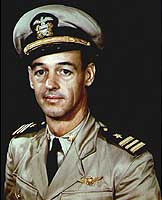
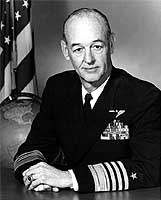 John Smith Thach was born in Pine Bluffs, Arkansas, on April 19, 1905. In 1923 he was appointed to the U. S. Naval Academy, where, on June 20, 1927, he was graduated and commissioned an Ensign in the U. S. Navy. Admiral Thach was assigned to the battleships USS MISSISSIPPI and USS CALIFORNIA, until he was ordered to flight training at Pensacola, Florida in 1929. In January 1930, Admiral Thach was designated a Naval Aviator and was assigned to his first operational squadron.
Form the beginning, Admiral Thach proved himself a highly capable pilot, becoming recognized as one of the Navy's aerial gunnery experts, repeatedly shooting top scores in every type of combat aircraft he flew.
During the next few years of his career, Admiral Thach's superior performance qualified him to be a test pilot and flight instructor and to receive a letter of commendation in 1940 for "exceptional skill and technique in aerial gunnery and bombing; efficient and meticulous operation of a squadron gunnery department; marked ability to train other pilots in fighting plane tactics and gunnery."
When the United States entered World War II, Admiral Thach was a Lieutenant Commander commanding Fighter Squadron Three, embarked on the aircraft carrier USS SARATOGA. At the time, Admiral Thach was one of the top fighter tacticians in the Navy. Intelligence reports from the Sino-Japanese was convinced him that the Navy's top carrier fighter, the F4F Grumman Wildcat, was no match for the superior flying performance of the Japanese Zero. Admiral Thach sought to devise a means to give his squadron a fighting chance against the Zero. The result, which he worked out with match skickson his kitchen table, was the famous "Thach Weave" still used today by modern jets fighters. He initiated the practice of having U. S. fighter planes operate in pairs, instead of trios. The pair would weave back and forth as they encountered the Zero, thus providing the wingman the opportunity to shoot at the Zero on his partners tail and vice versa. This tactic proved highly successful at the Battle of Midway.
Admiral Thach returned to Pearl Harbor to instruct other pilots in the use of his new technique. Later in the war, Admiral Thach was assigned to the Fast Carrier Task Force as Air Operations Officer, where he developed the system of blanketing enemy airfields with a continuous patrol of carrier-based fighters. The tactics is credited with destroying the air offensive capabilities of Japan. His direction of the Navy's final offensive blows to the Japanese mainland led to an invitation to participate in the Japanese surrender aboard the battleship USS MISSOURI.
Admiral Thach continued his distinguished career after the war, commanding the aircraft carrier USS SICILY in the Korean conflict, and later, the carrier USS FRANKLIN D. ROOSEVELT. He was promoted to the rank of Rear Admiral in November of 1955, Vice Admiral in January of 1960, and to Admiral in March of 1960. In recognition of his work, the Navy annually awards the best anti-submarine warfare aircraft squadron "The Admiral Thach Award". In 1965, Admiral Thach was ordered to duty as Commander-in-Chief of U. S. Naval Forces in Europe and served there until his retirement in May 1967, after more than 40 years of service. Admiral Thach died on 15 April 1981.
Admiral Thach participated in twelve major engagements or campaigns and was awarded the following distinctions: Distinguished Service Medal, Navy Cross, Letter of Commendation from Fleet Admiral Nimitz, Gold Star in lieu of second Navy Cross, Silver Star Medal, Legion of Merit, Bronze Star Medal, Gold Star in lieu of second Legion of Merit, plus other campaign, unit and service awards. Admiral Thach is survived by his two sons, John Smith Thach, Jr. and William Leleand Thach.
back to top go to the end of the pageTHACH SINKEX:
The decommissioned THACH was sunk as a target during exercise RIMPAC 2016 off the Hawaiian Islands. The sinking took place on July 14, 2016, 55 nautical miles north of the island of Kauai. The THACH took an amazing number of hits before she finally sunk at 07.25pm local time. She now rests 15,000 feet deep in the Pacific Ocean. According to the US Navy, the following munitions were used against the guided missile frigate: one UTM-84 sub-launched Harpoon missile fired by a South Korean submarine, one RTM-84 ship-launched Harpoon missile fired from HMAS Ballarat, AGM-114 Hellfire missiles fired by an Australian SH-60S helicopter, an AGM-65 Maverick and an AGM-84 fired by US maritime patrol and reconnaissance aircraft, one RGM-84 ship-launched Harpoon missile from the USS PRINCETON (CG 59), an AGM-114 Hellfire missile fired by a US Navy SH-60S helicopter, a Mk-84 bomb fired from a US Navy F/A-18, a GBU-12 Paveway laser-guided bomb dropped from a US Air Force B-52 bomber and finally a Mk-48 advanced torpedo fired from a US Navy attack submarine.
The video below shows a few of the attacks on the THACH and many close-ups of the inflicted damage. The actual sinking is not shown. This is a long video (17:38 minutes). US Navy video by Petty Officer 1st Class Dominique Lasco.
back to top go to the end of the pageUSS THACH Image Gallery:
 |  |  | 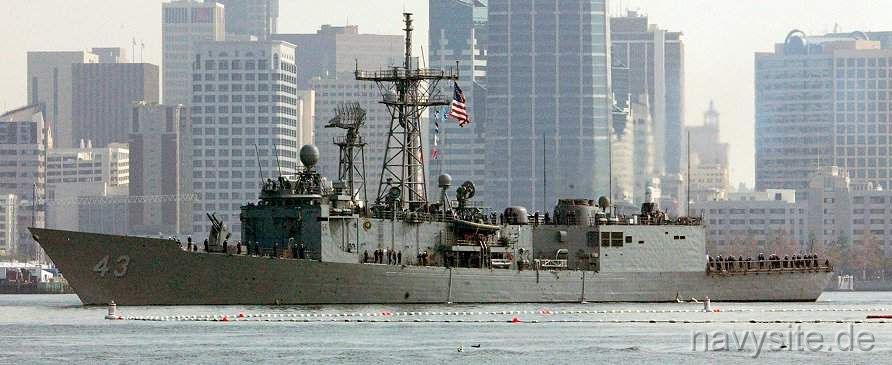 | |
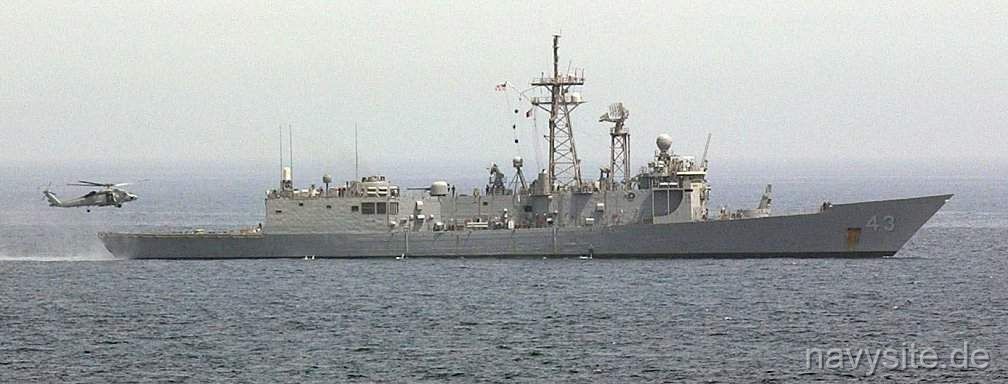 | 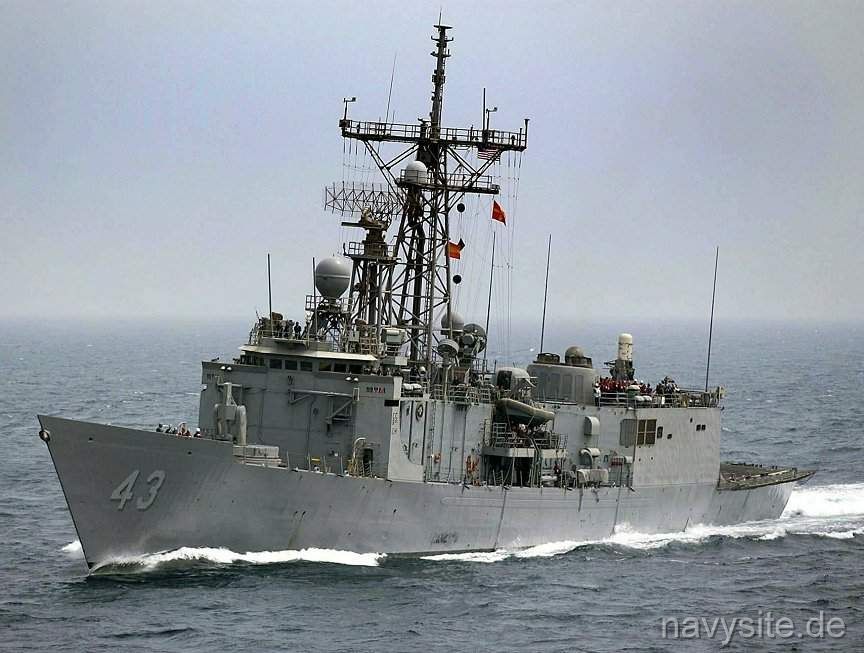 | 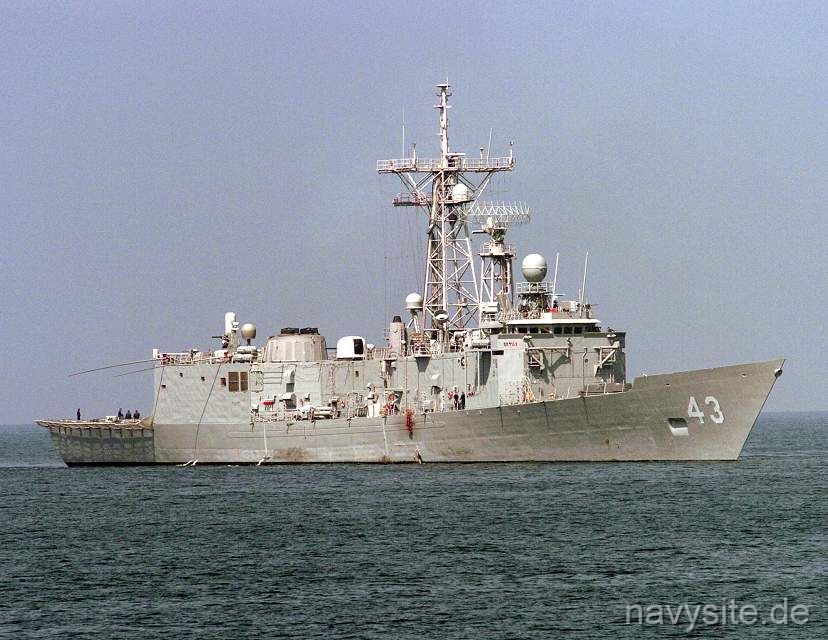 | ||
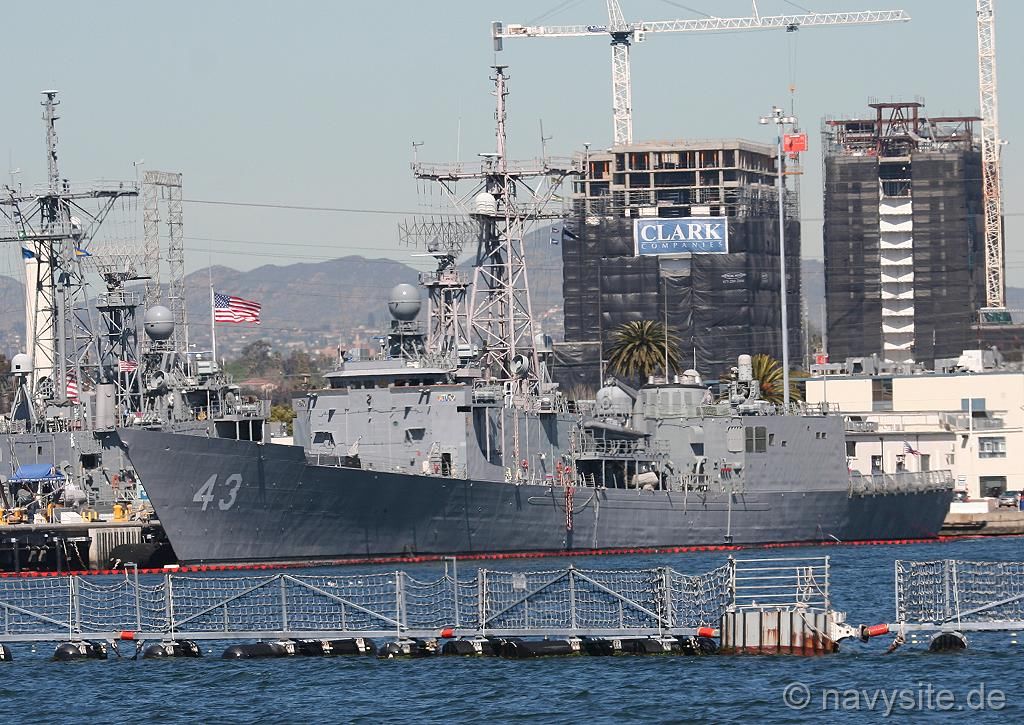
The photo below was taken by me and shows the THACH at Naval Base San Diego, Calif., on March 10, 2008.
 |
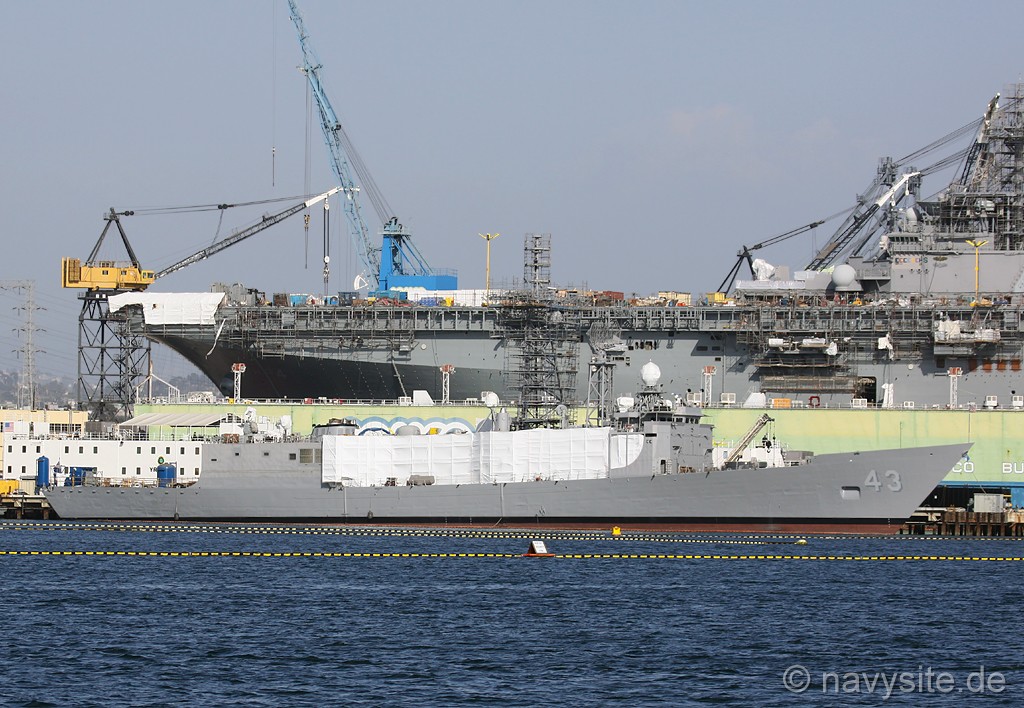
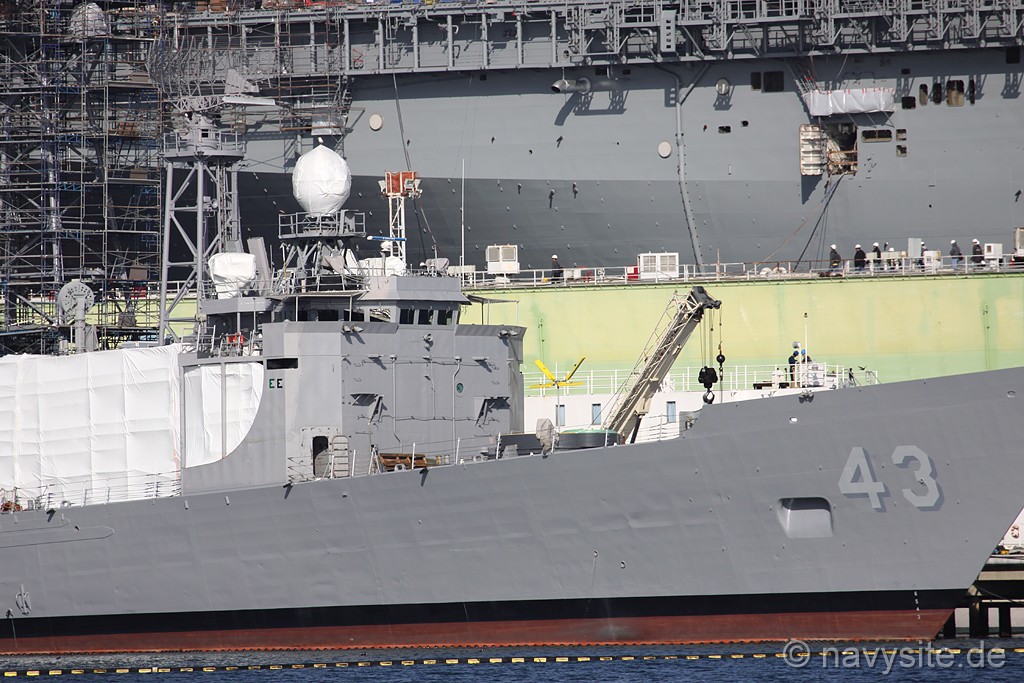
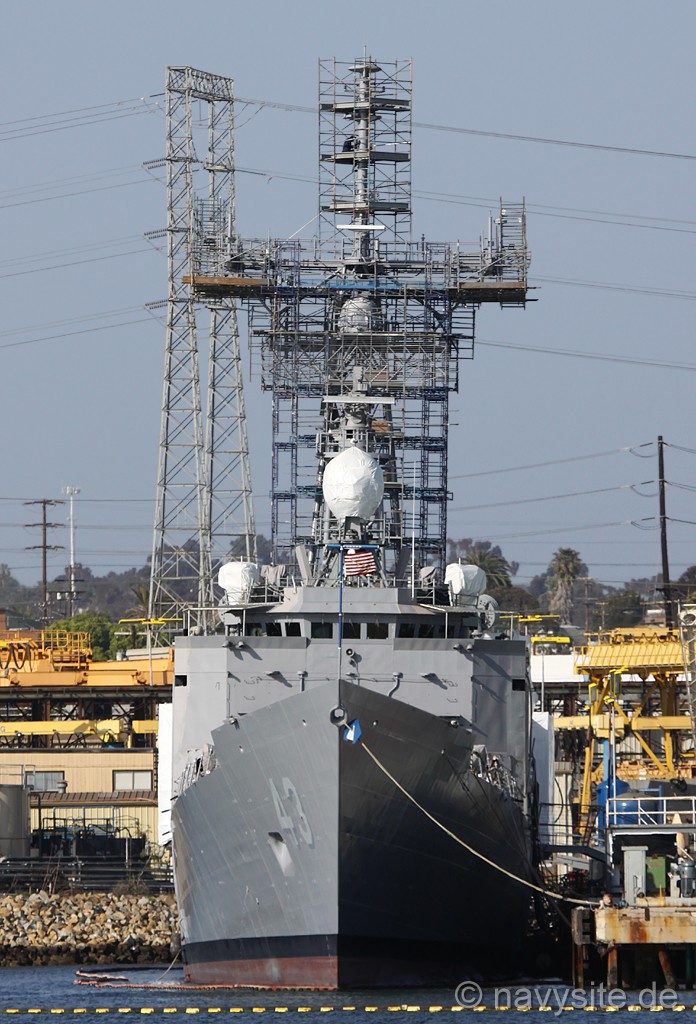
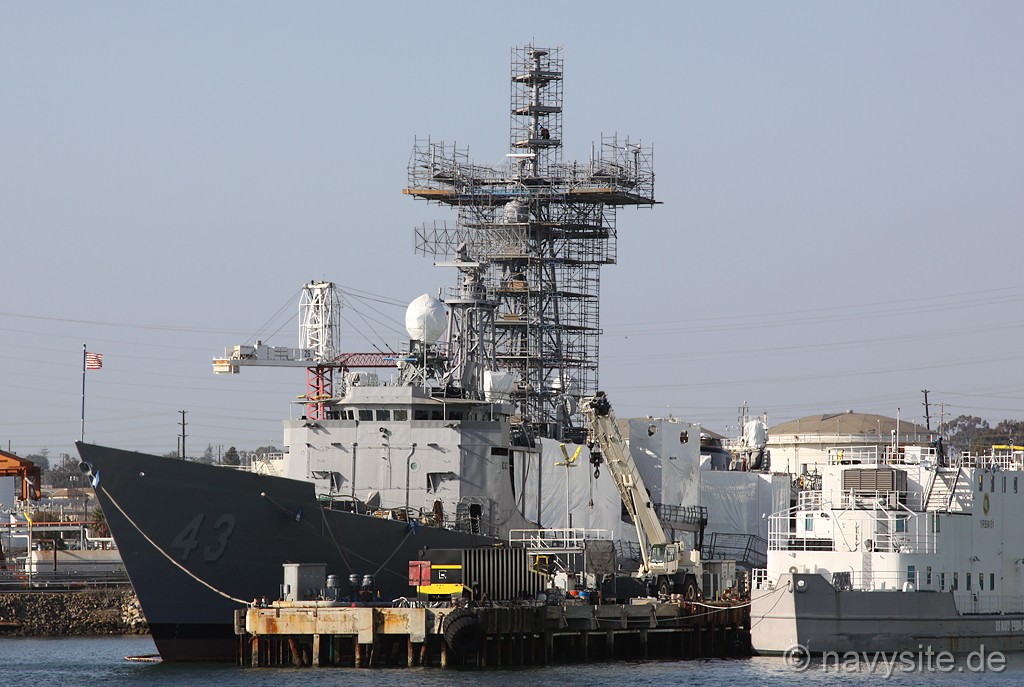
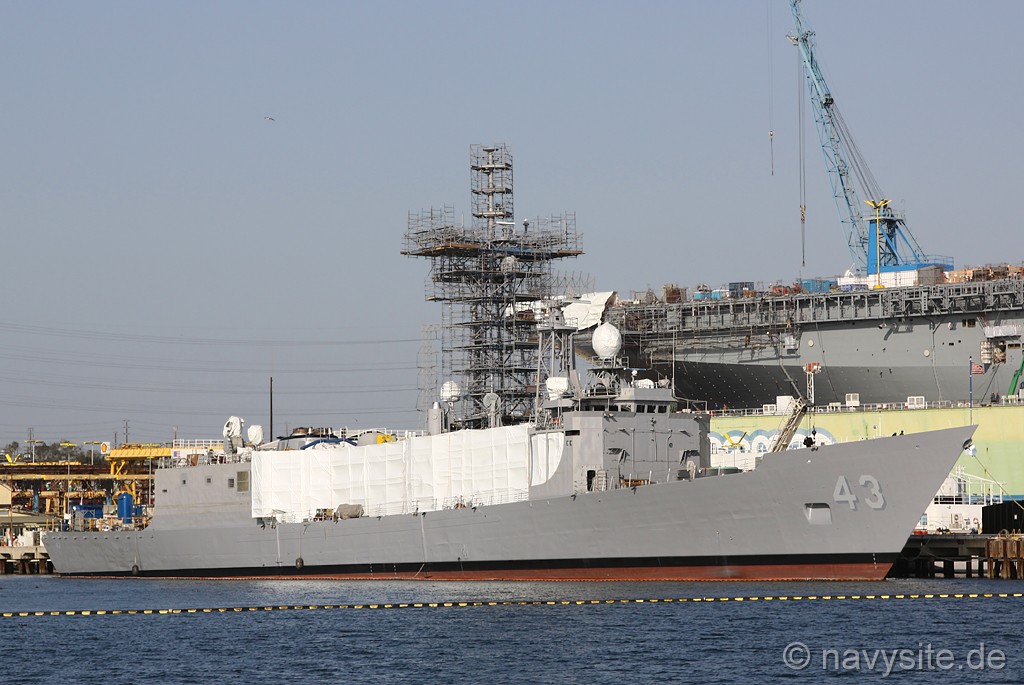
The photos below were taken by me and show the THACH undergoing maintenance at San Diego, Calif., on March 23, 2010.
 |  |  |  |  |
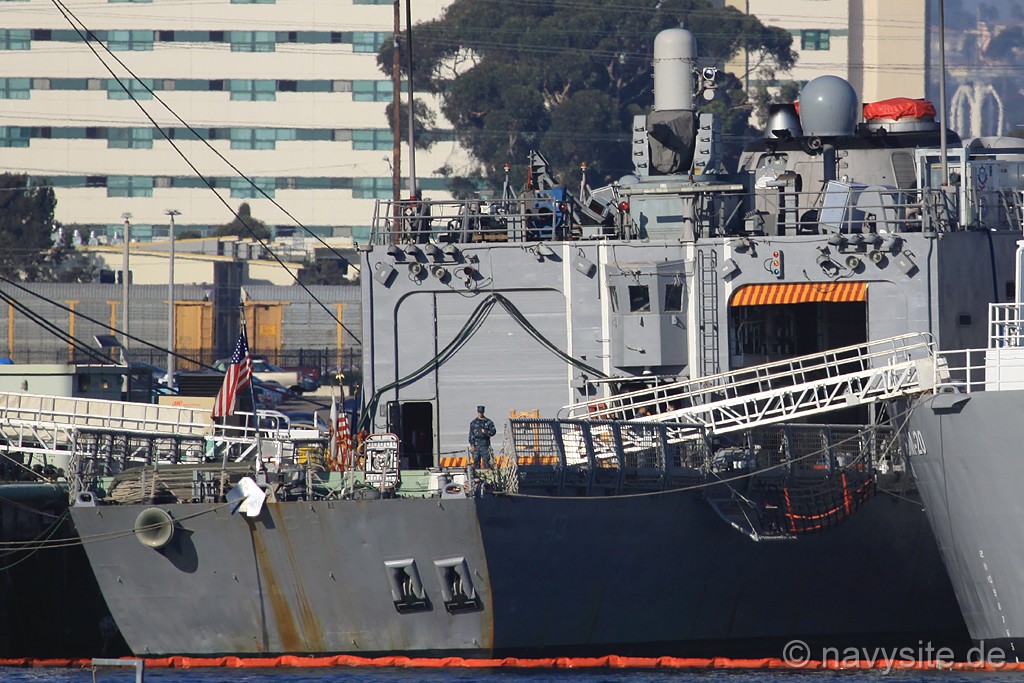
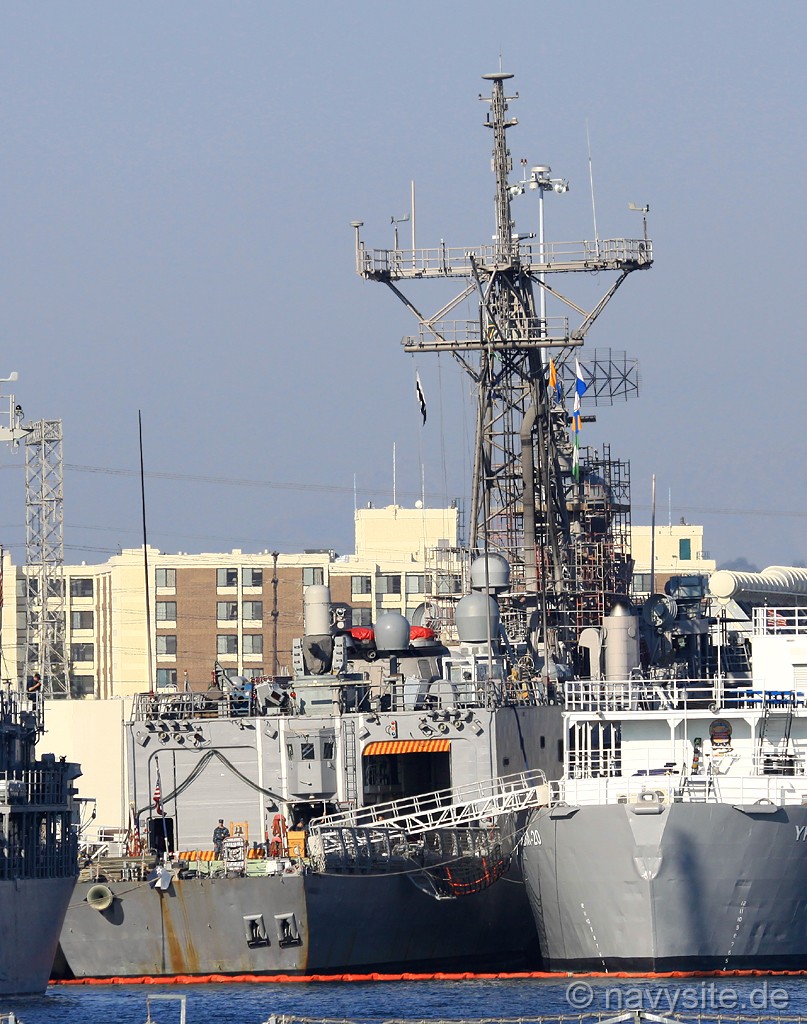
The photos below were taken by me and show the THACH undergoing maintenance at San Diego, Calif., on September 29, 2011.
 |  |
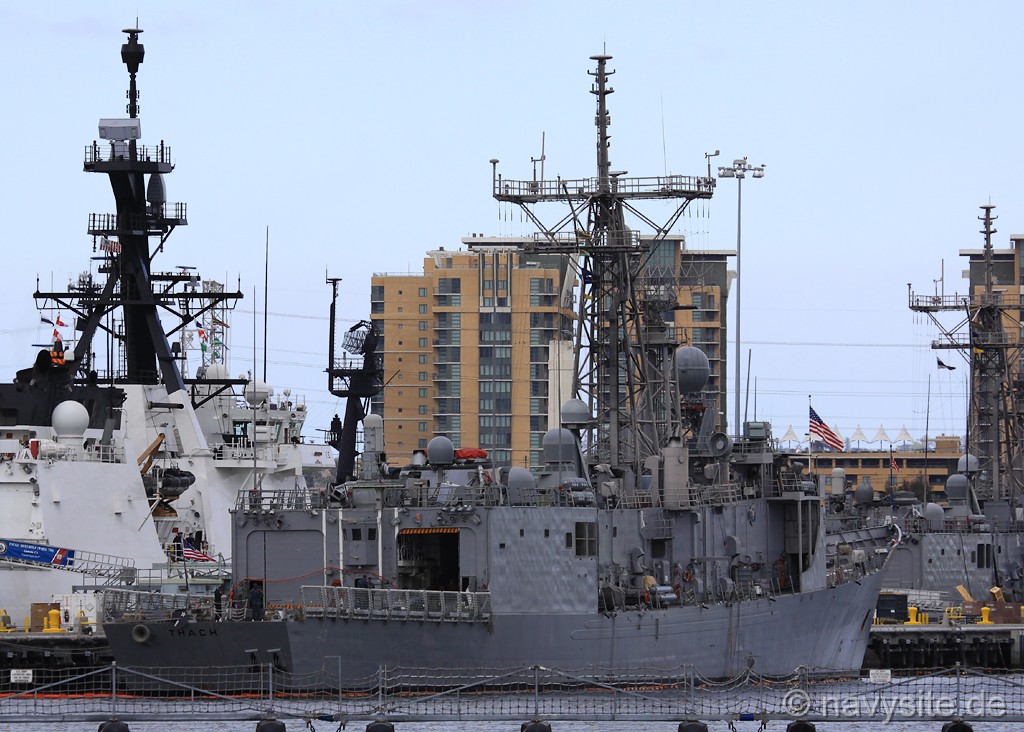
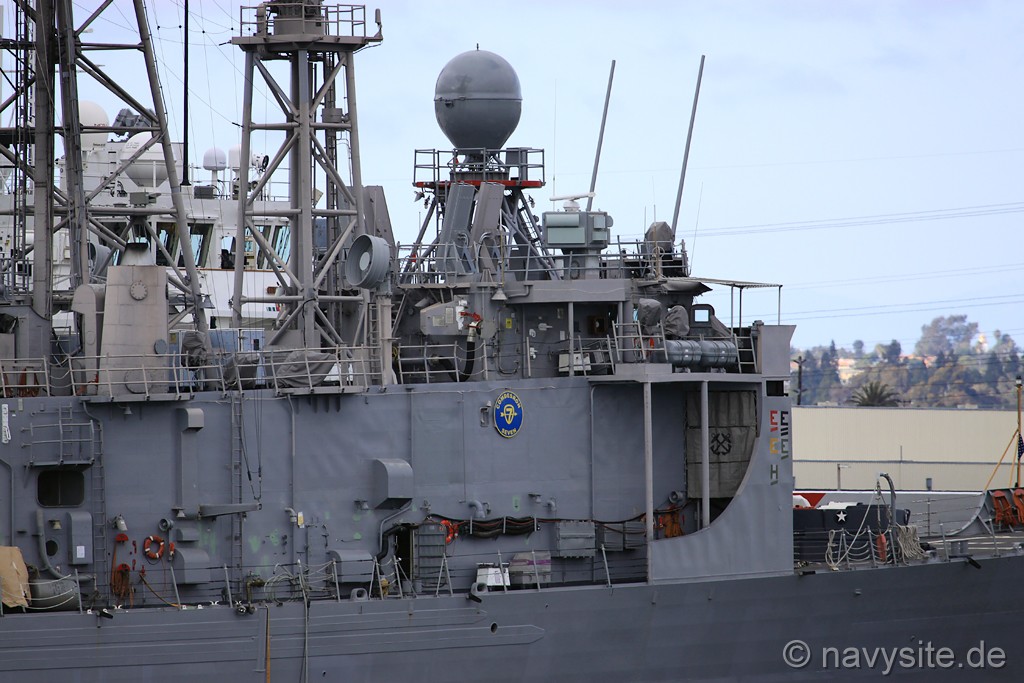
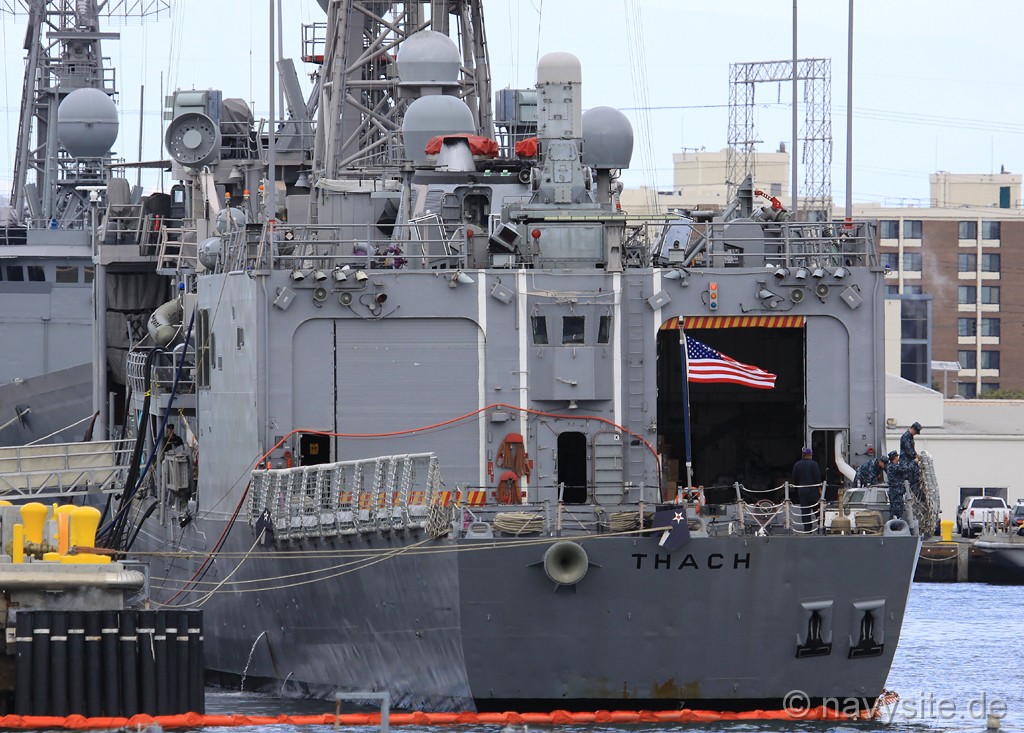
The photos below were taken by me and show the THACH at Naval Base San Diego, Calif., on March 15, 2012.
 |  |  |
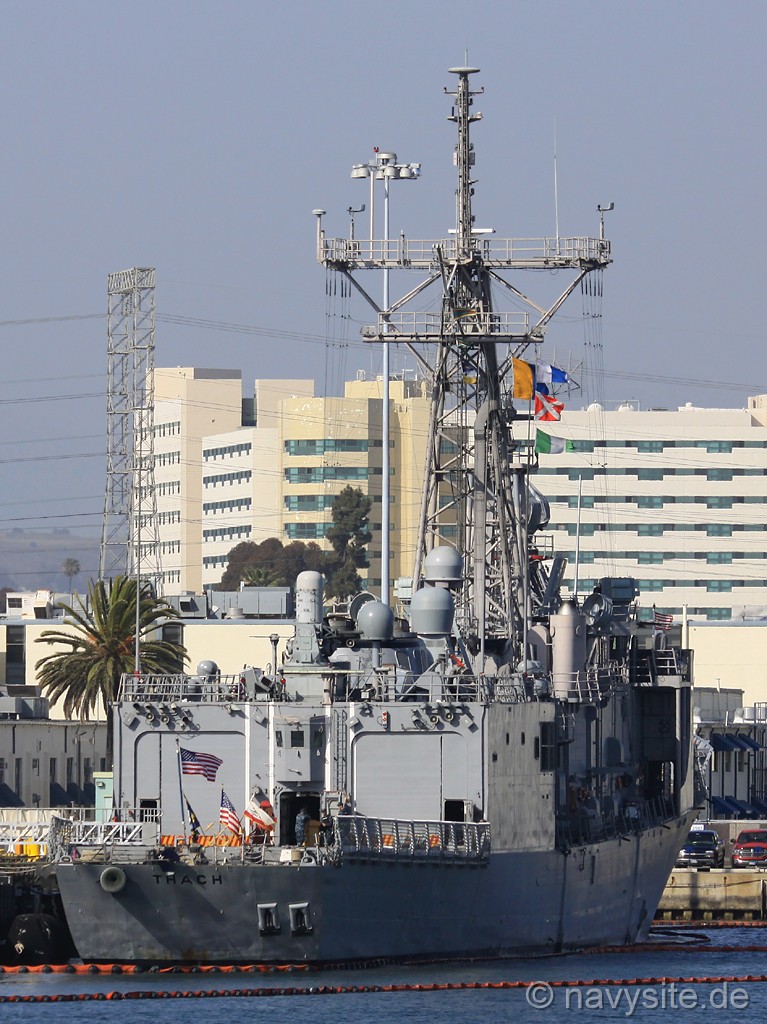
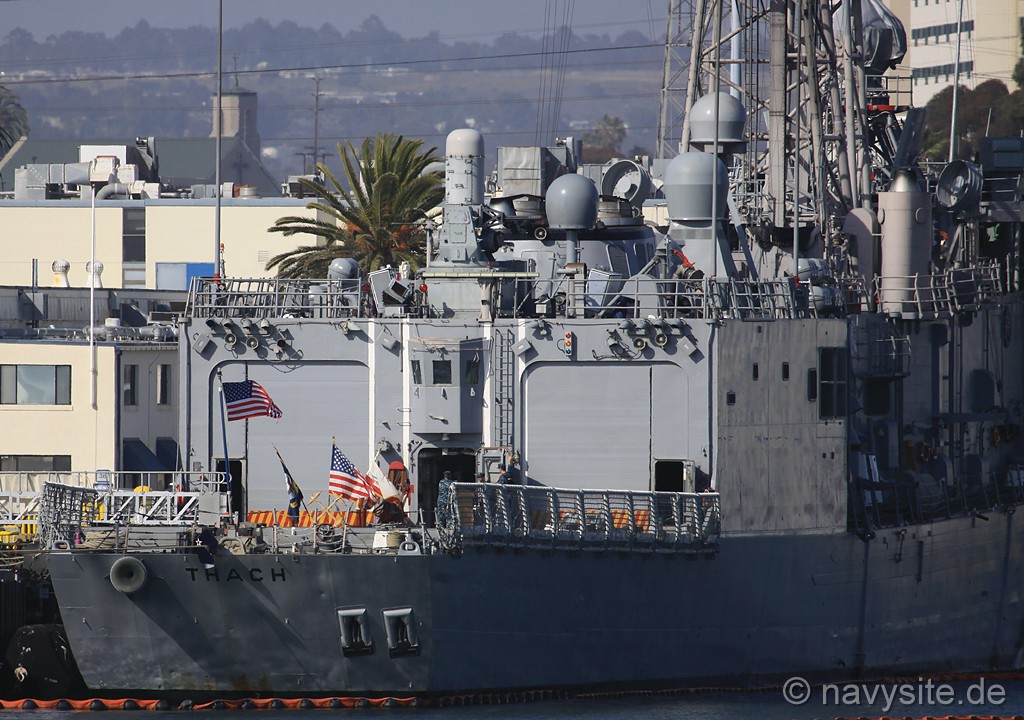
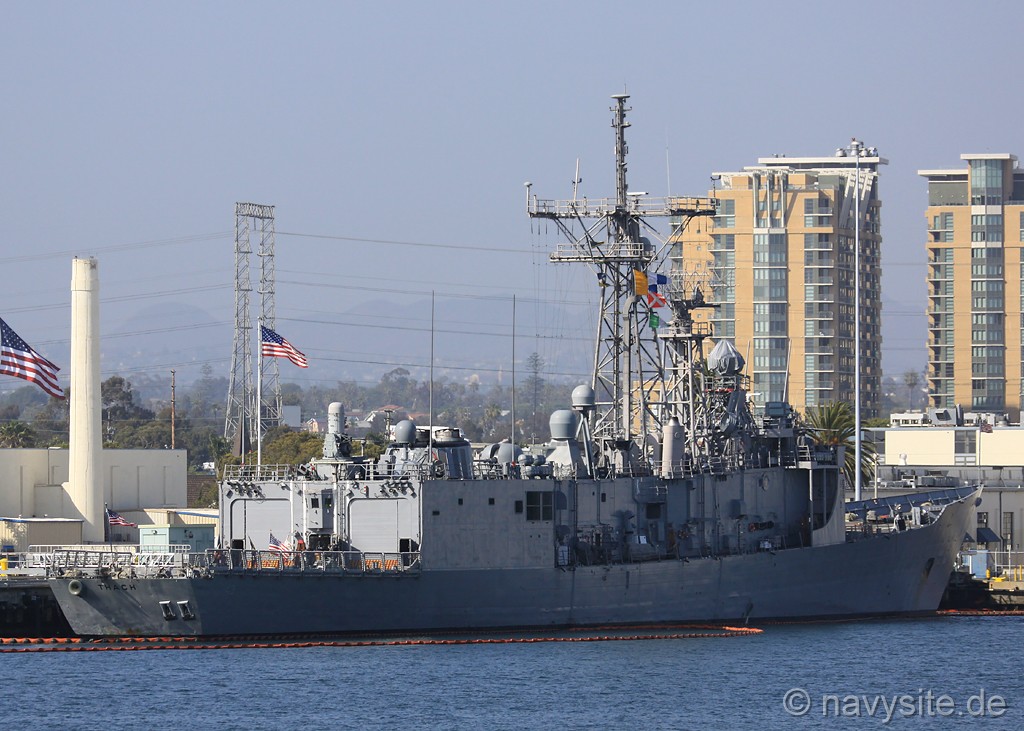
The photos below were taken by me and show the THACH at Naval Base San Diego, Calif., on May 8, 2012.
 |  |  |
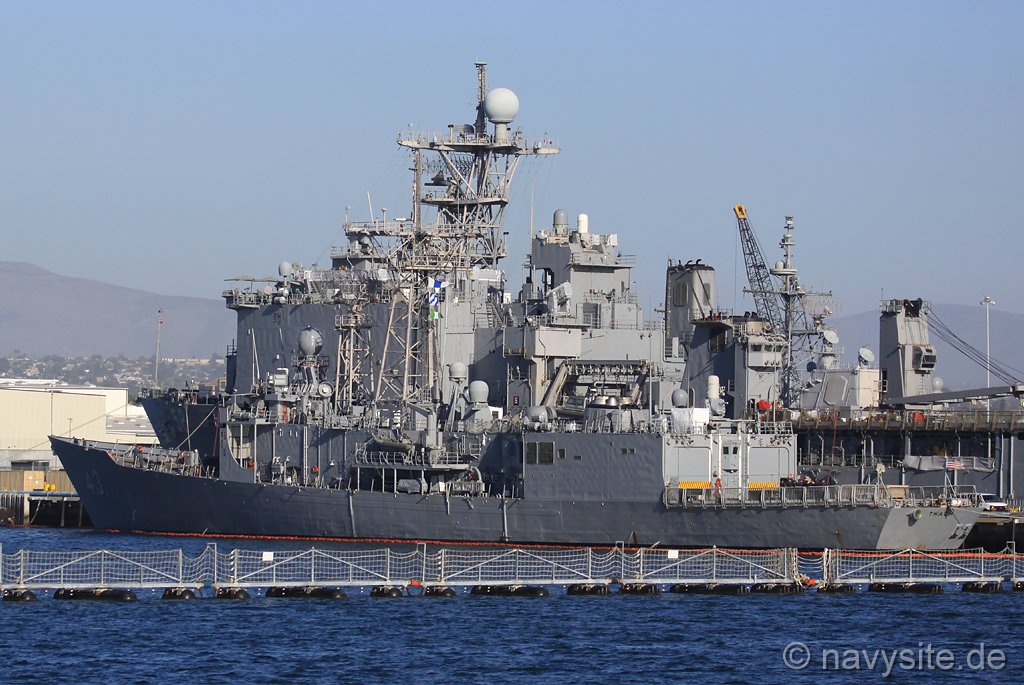
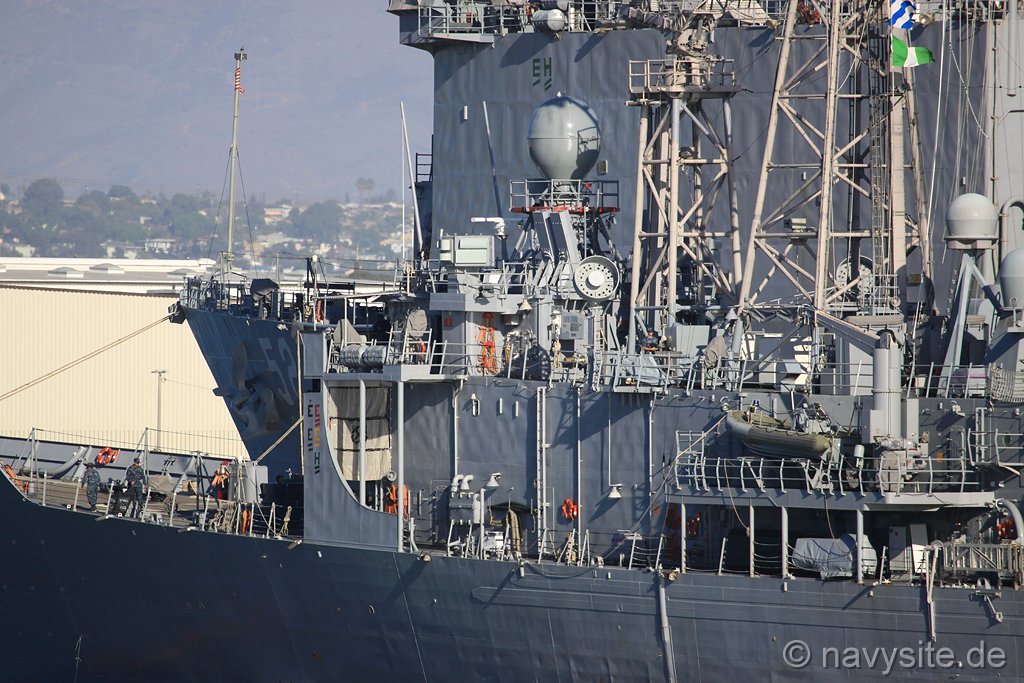
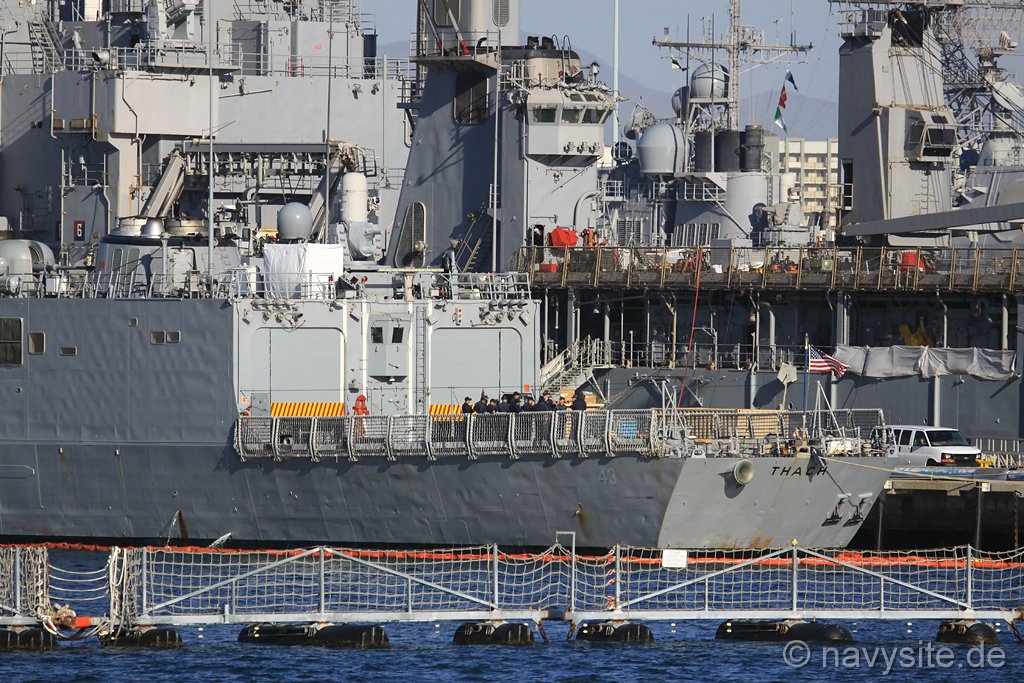
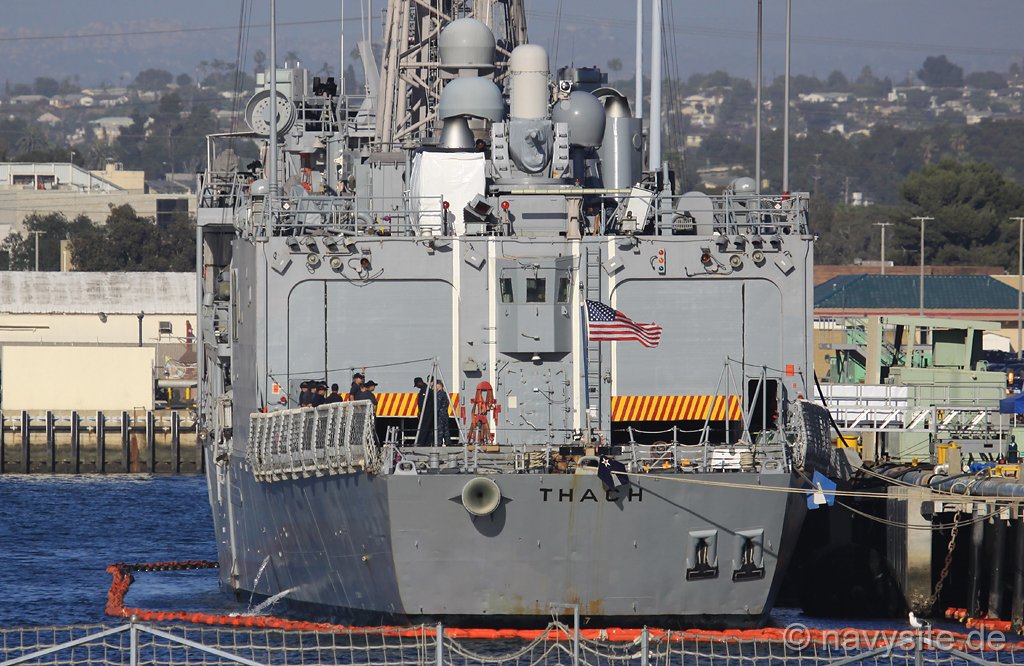
The photos below were taken by me and show the THACH at Naval Base San Diego, Calif., on October 3, 2012.
 |  |  |  |
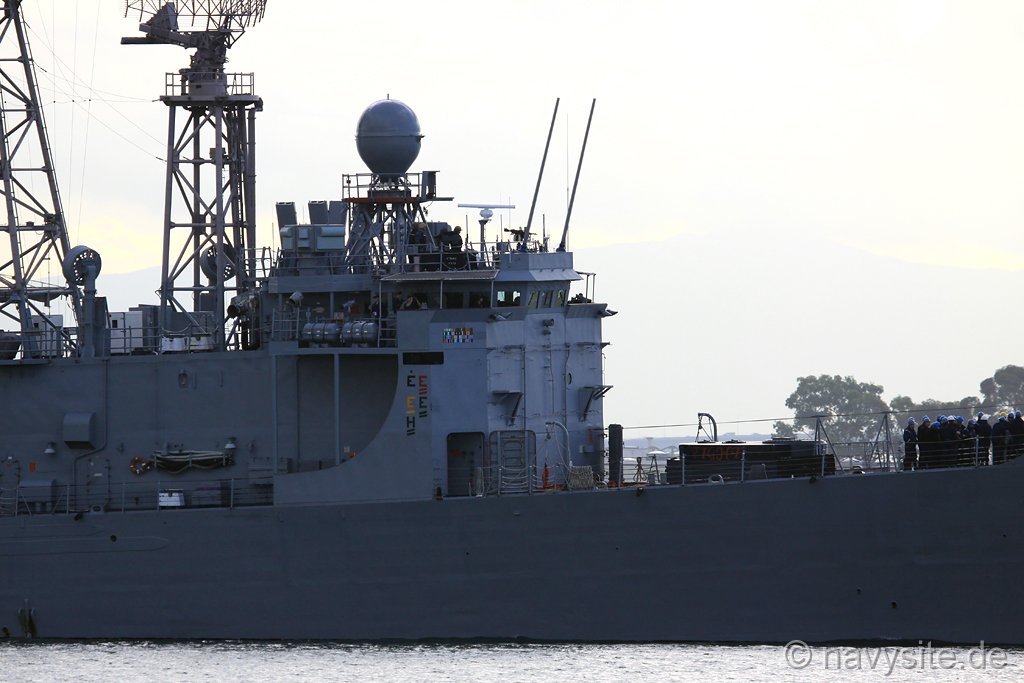
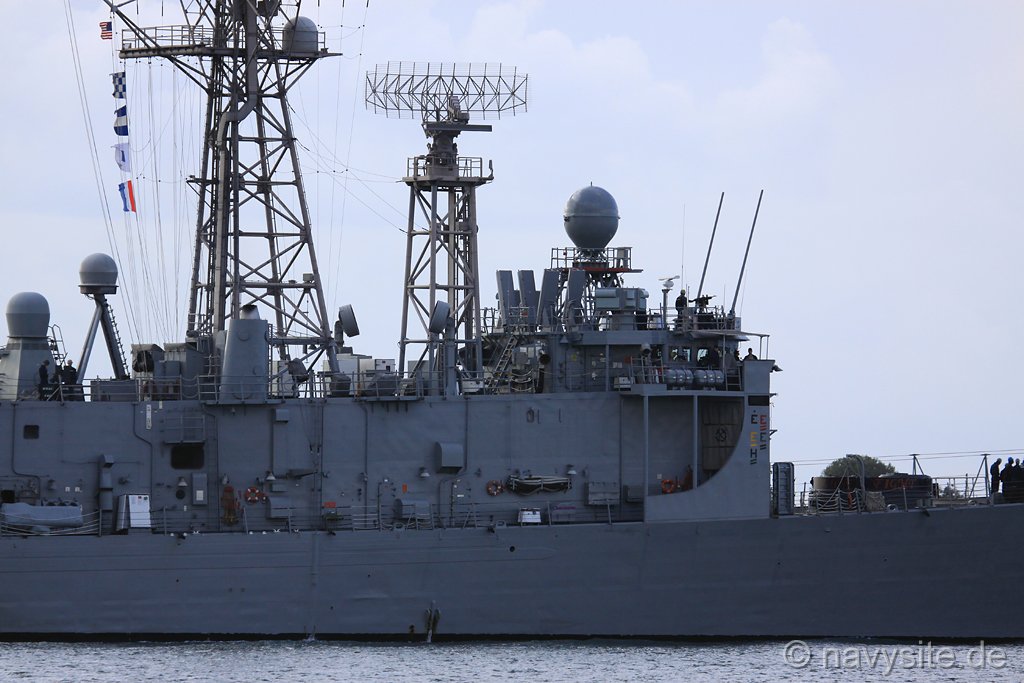
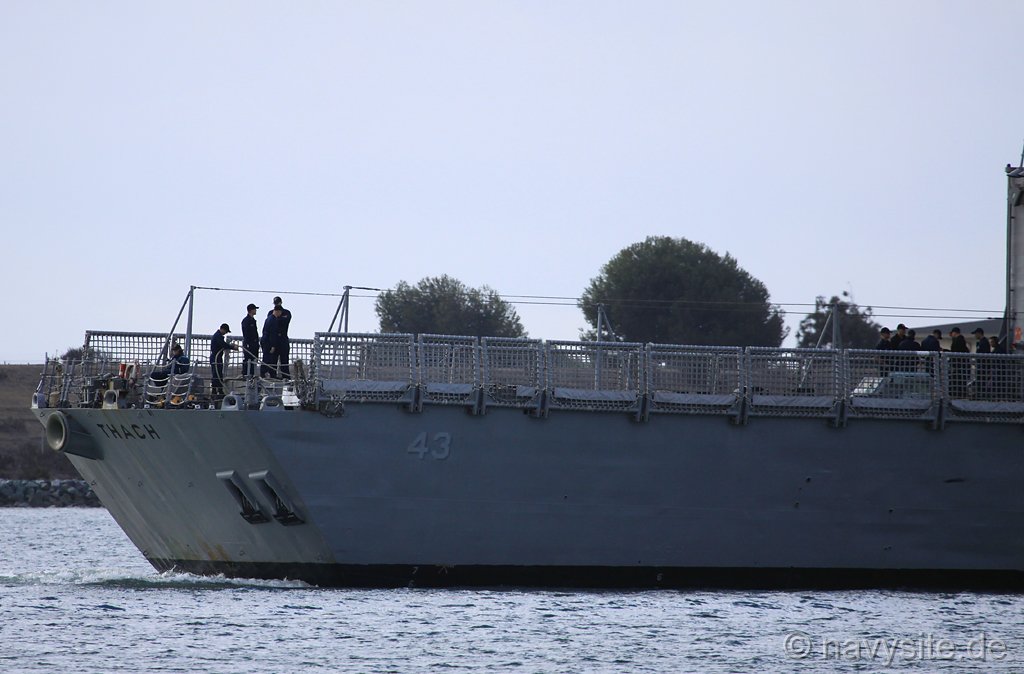
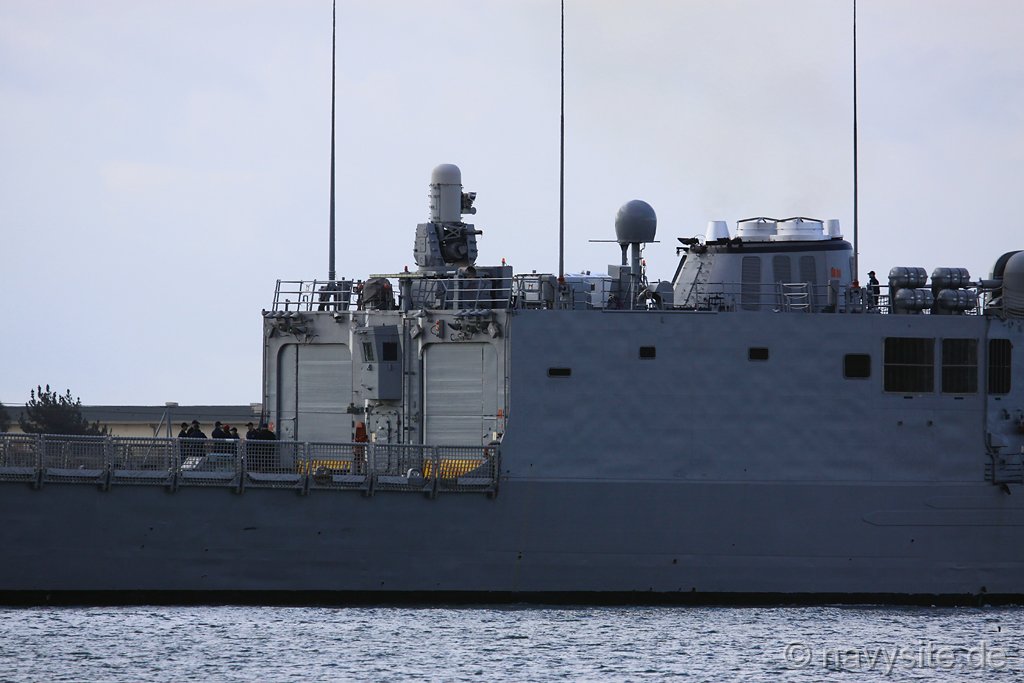
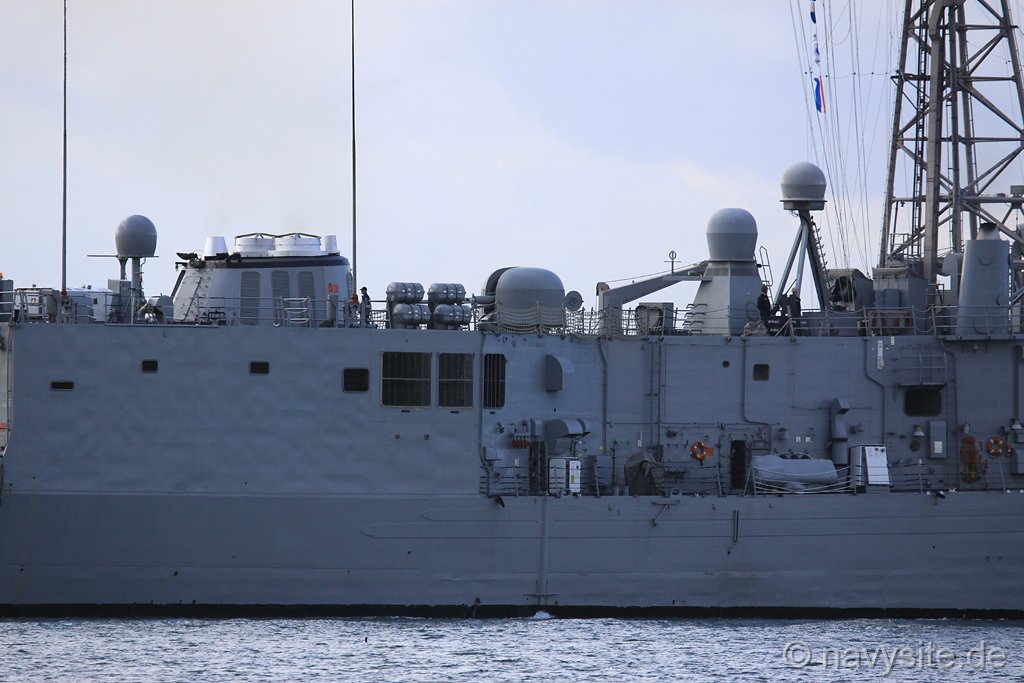
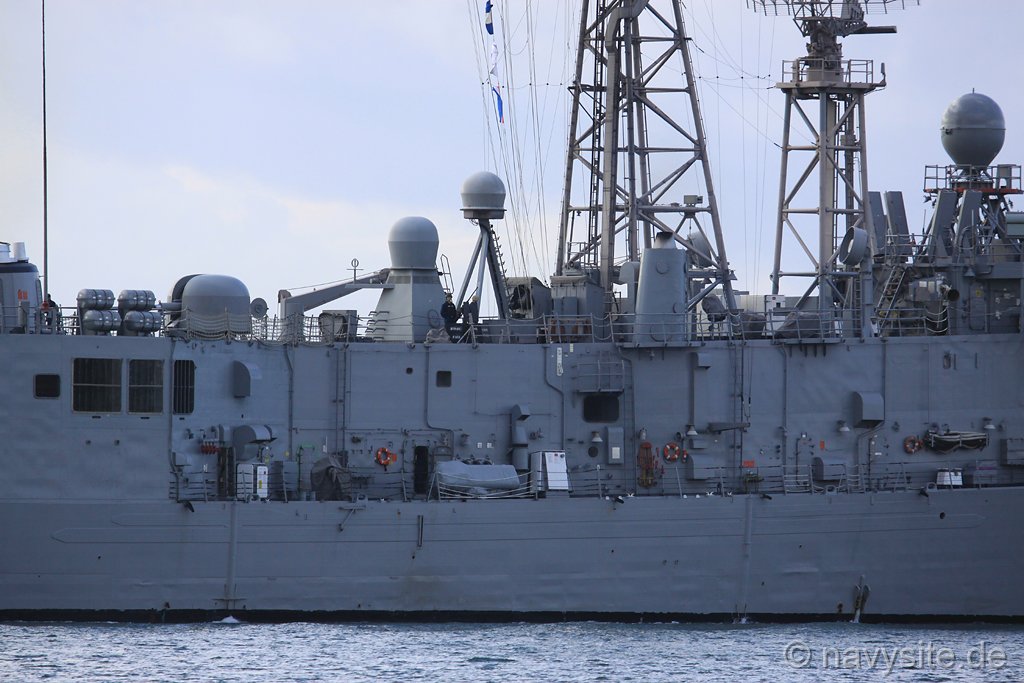
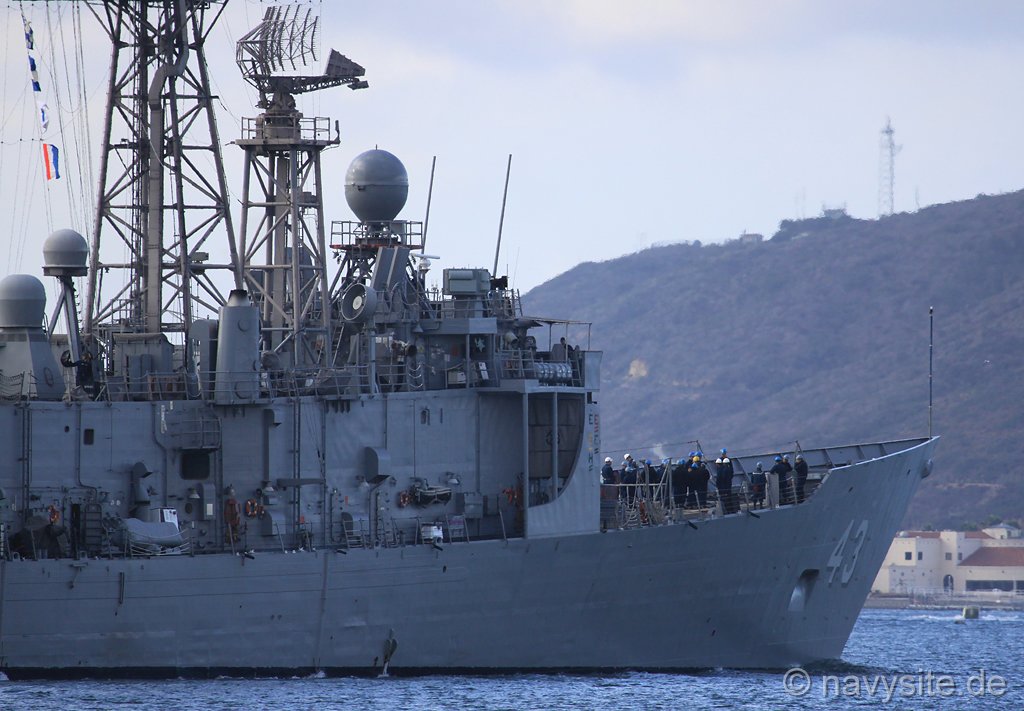
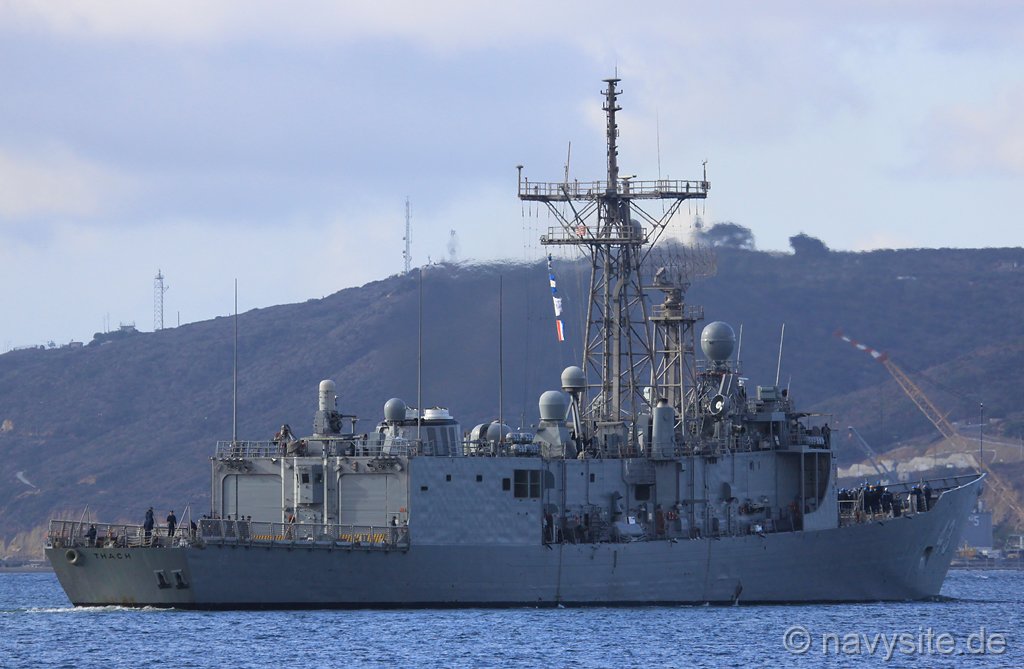
The photos below were taken by me and show the THACH departing San Diego, Calif., on October 11, 2012.
 |  |  |  |  |
 |  |  |
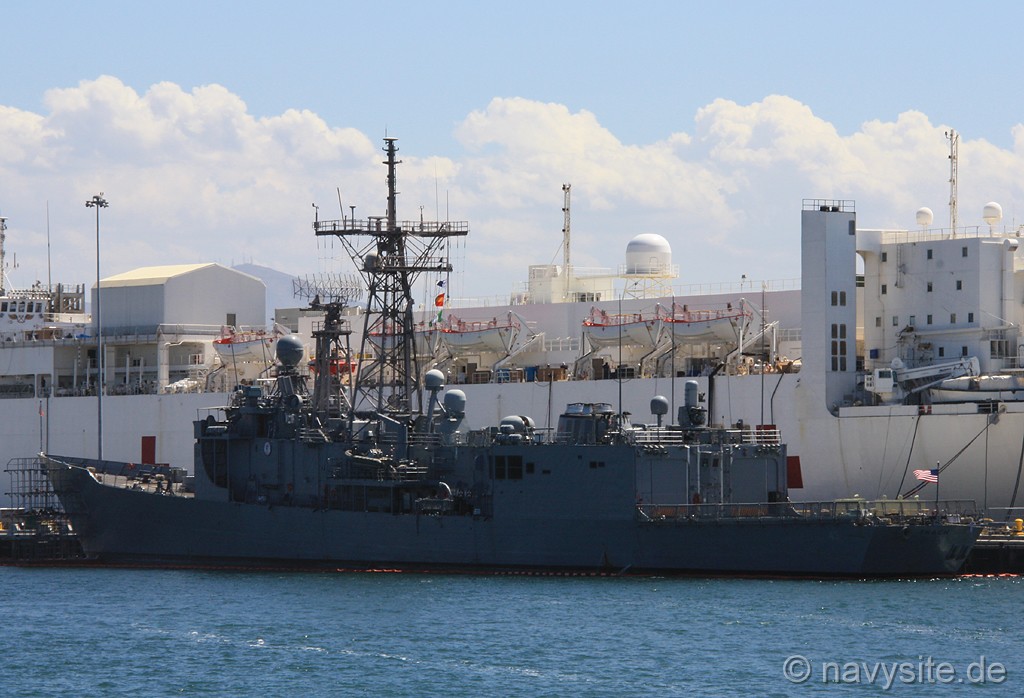
The photo below was taken by Henry Schnutz and shows the THACH at Naval Base San Diego, Calif., on August 27, 2013.
 |
back to top Back to Frigates list. Back to ships list. Back to selection page. Back to 1st page.